
)
)
In 2025, the number of US wind turbines struck by four or more lightning strokes surged 32.1% compared to 2024, while the total number of turbines struck by lightning rose by 18.4%, the Xweather Annual Lightning Report reveals.
Across the US, lightning counts in 2025 increased by 20%. In other words, while the total count of turbines struck followed the national trend, more and more turbines are accumulating repeated impacts that degrade protection systems and lead to blade damage from minor receptor wear to complete blade loss.
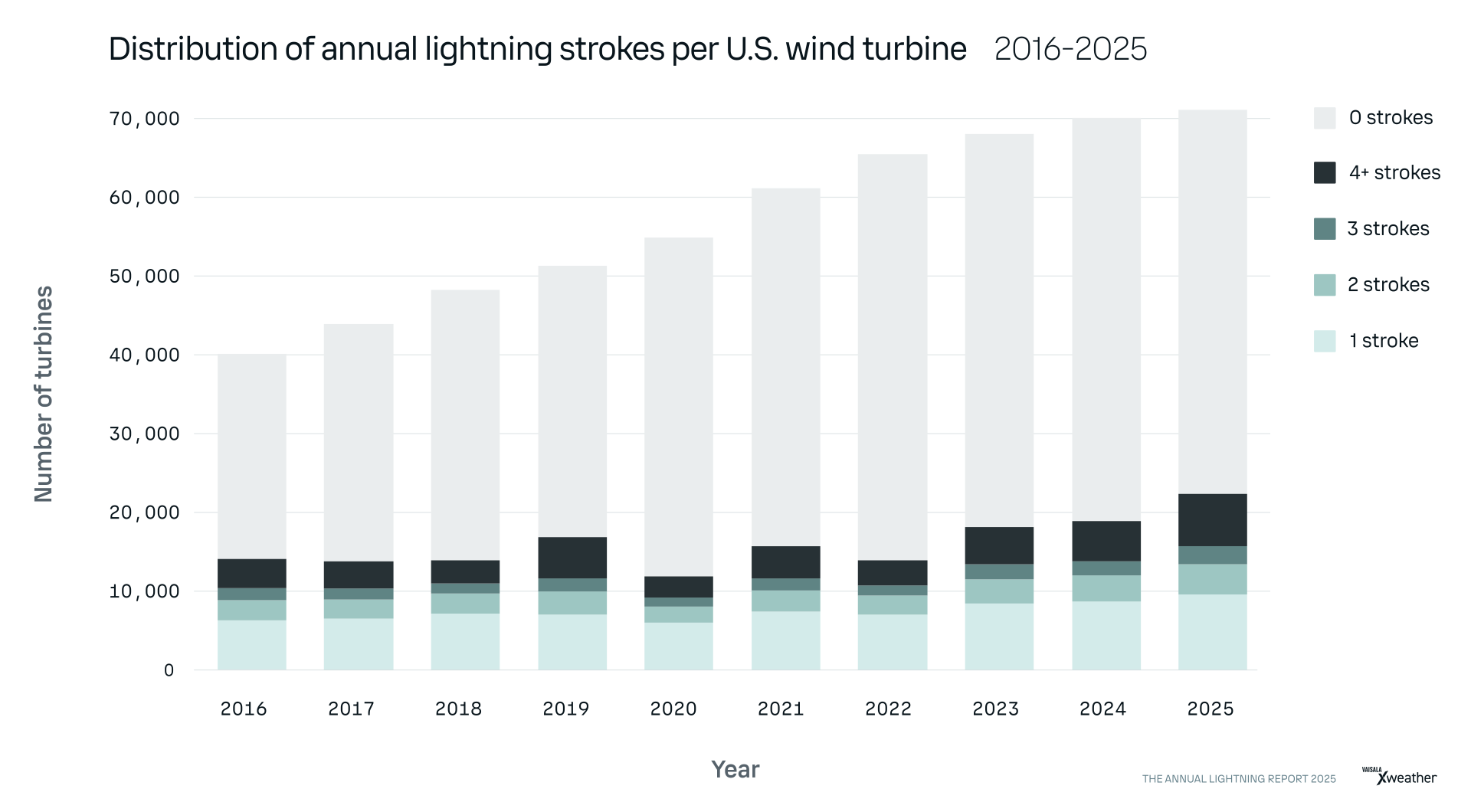
The chart shows the distribution of annual lightning strokes per U.S. wind turbine from 2016 to 2025. A stroke is a rapid discharge between the cloud and the ground. A lightning strike can contain one or more strokes. A cloud-to-ground flash can contain one or more strikes.
This trend is closely tied to turbine height and siting. Xweather’s analysis of more than 70,000 operational turbines concludes that nearly one in three (31.4%) was struck by lightning in 2025. Taller turbines are hit more often, and as tip heights above 115 meters become more common in lightning-prone regions, more turbines are exposed to repeated strokes. Operators are also seeing more upward-initiated lightning, a once-rare phenomenon that now contributes to multi-stroke damage cases.
While most strokes cause no structural harm, the financial impact of those that do is considerable. Lightning is the leading cause of blade damage in the U.S., costing the industry over $100 million annually and accounting for roughly 60% of blade losses.
Reliable turbine-level stroke data helps manage exposure and associated costs. Operators cannot afford to inspect every turbine after a reported strike, and knowing which turbines were struck by which types of lightning and how often allows them to focus inspections where they matter most, rather than surveying entire sites. The same data supports warranty and insurance processes by establishing whether a strike fell within the IEC design limits of the turbine’s lightning protection system.
As turbines get taller and wind farms expand into higher-risk regions, high-quality turbine-level lightning data becomes essential for effective inspection programs and long-term asset risk management.
Take the guesswork out of post-storm inspections
Wind farm operators generate lightning incident reports, identify turbines that have been struck, and prioritize post-storm inspections with Xweather Protect. See how in this recorded demo.
)
)
)
)