We sat down with Terry Boston, Founder and Board Member of Grid Protection Alliance, to discuss the relationship between the modern electricity grid and lightning.
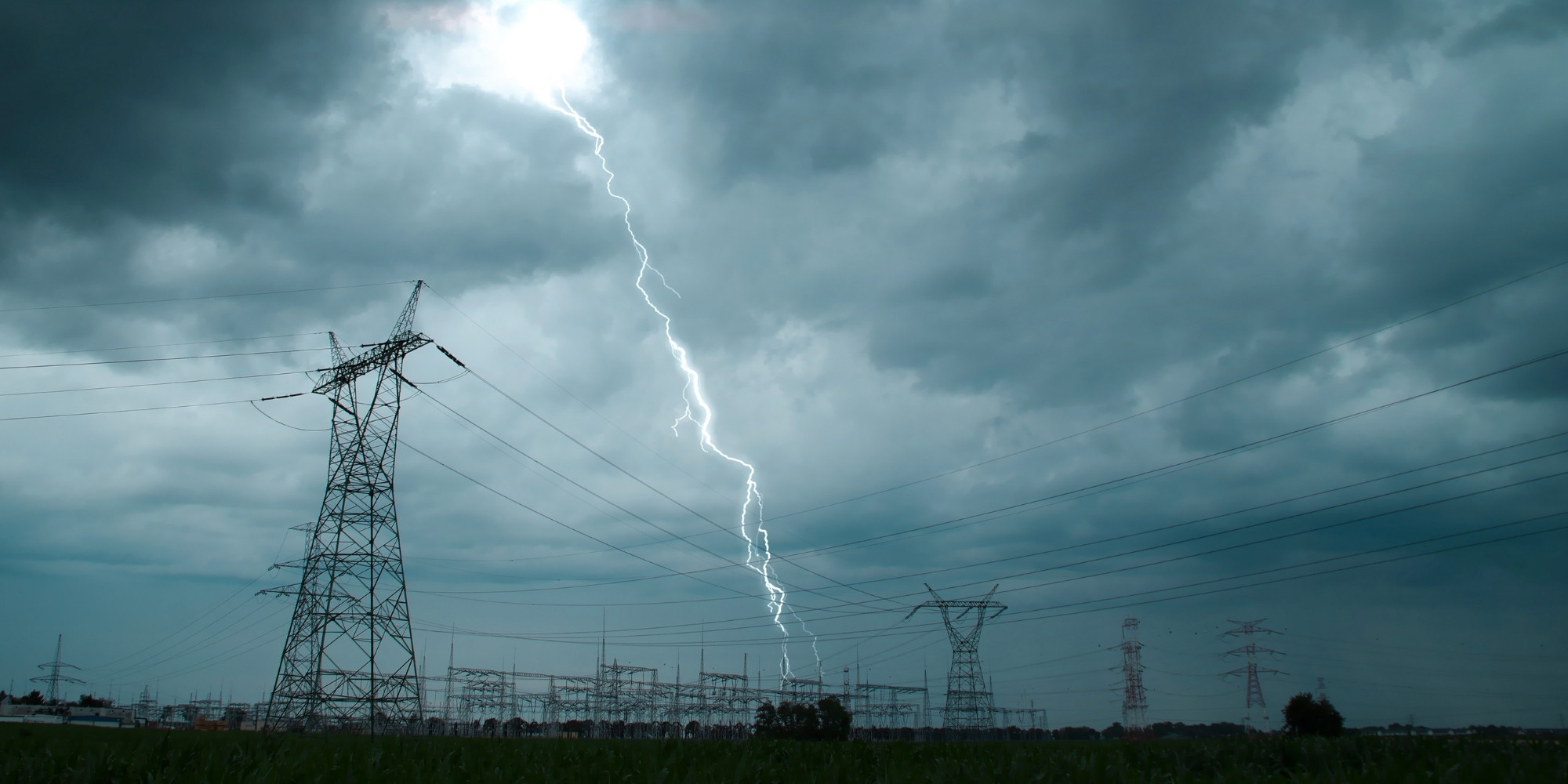
Lightning remains the most common cause of momentary outages across the American transmission grid, challenging operators to maintain reliability across a vast and complex network. From early lightning detection systems to today’s advanced analytics, the way grid operators understand and respond to lightning threats has come a long way. By pinpointing strike locations and measuring intensity, operators can now target protection and reduce costly equipment failures. These advances are especially critical as the digital economy raises expectations for uninterrupted power.
For the 2025 issue of the Annual Lightning Report, we sat down with Terry Boston, Founder and Board Member of Grid Protection Alliance, to discuss the relationship between the modern electricity grid and lightning. Terry has spent his career at the center of the world’s biggest energy challenges. He’s explained grid reliability to Congress and the White House and built partnerships everywhere from South Africa to South Korea. When it comes to keeping the lights on, few people bring a broader or deeper perspective.
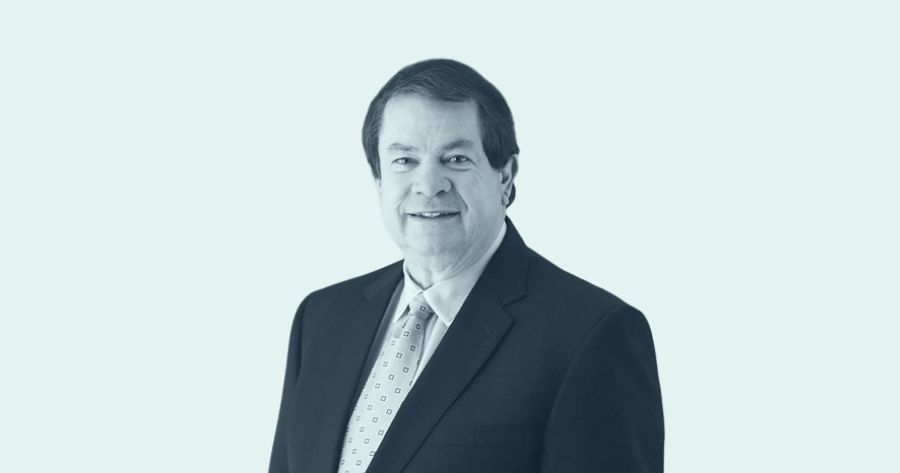
Terry Boston, Grid Protection Alliance
On the importance of the US transmission grid
“The sheer scale of the U.S. transmission grid speaks for itself: it spans about 500,000 miles—enough to wrap around the globe 100 times at the equator. That number alone hints at its unprecedented significance and the sheer scale of what we’re dealing with. When I worked at TVA, we had 16,000 miles of transmission line just in our system, and it would take three months of daylight hours to do a visual inspection by helicopter. That was before we had the benefit of infrared cameras and high-resolution video for aerial inspections.”
“The National Academy of Engineering, which was established back in the 1860s by Abraham Lincoln to advise the government on science and engineering matters, was once asked to list the most important engineering developments of the last century. Not surprisingly, electrification and the grid came out on top. Nothing has improved our standard of living more. Nothing has done more for our productivity than electricity. The importance of what we’re talking about here is huge.”
The shift to science-based lightning monitoring
“In the early days, we worked with Weyerhaeuser, a large paper manufacturing company in the forests of Mississippi. Their operations were so sensitive to lightning that they would shut down whenever they heard crackling on the AM radio or saw a storm front approaching on radar. This was because Mississippi had the highest lightning flash density in our region, with storm fronts coming up from the Gulf Coast and often paralleling the transmission lines.”
“That got us thinking: what if, instead of relying on a single antenna at a place like Weyerhaeuser, we used multiple antennas to triangulate the exact location of lightning strikes? By analyzing the intensity of the radio noise, we could reliably gauge the strength of each lightning stroke, measured in kiloamps. This approach revealed just how much lightning can vary—a 75-kA stroke is fairly strong, but we’ve seen a huge range of different events, including some of the most intense lightning ever recorded on the system.”
“As we began measuring both the occurrence and intensity of lightning, we discovered we could control many of our system operations in response to lightning activity. This shift from guesswork to science-based monitoring allowed us to make smarter decisions about where to place protection and how to respond to storms, ultimately improving both reliability and safety across the grid.”
From flickers to blackouts: Lightning’s unpredictable toll
“Lightning is the most common cause of momentary outages. Let me share a few examples. The 1977 New York outage—this affected Long Island and some of the boroughs, though not Manhattan—was caused by lightning taking out two 345 kV lines and triggering a cascading event. Another, much larger in square miles, happened on June 25th, 1998, when a lightning strike in the Midwest caused a cascading failure that went all the way up into Manitoba.
The most expensive one that I’ve encountered involved the highest intensity lightning stroke ever measured on the TVA system—the Tennessee Valley Authority, which manages one of the largest public power systems in the United States. This was a 300 kA stroke. The lightning detection network in Tucson initially dismissed it as an error or noise because it was such a high-intensity event. But it actually tripped off two nuclear plants, and you’re talking one to two million dollars per unit per day in lost generation.”
Tracing the damage
“Lightning damage isn’t limited to just the transmission line itself. When a high-intensity strike hits close to a substation, you have to worry about damage to transformers and other equipment, which can be costly and time-consuming to repair. On the lines themselves, the most common problem is tracking on the insulators—lightning leaves marks that reduce the insulation level, making the line more vulnerable to future strikes or even worse failures.”
“Another frequent issue is the failure of the overhead ground wire that runs above the line. These wires are designed to take the brunt of a lightning strike and protect the conductors below, but if an older or damaged ground wire fails, it can take the entire line out of service. In the past, the only way to find the damage was to fly the entire line with a helicopter or fixed-wing plane after the weather cleared, which could take a lot of time and resources—especially given the sheer size of the grid.”
“These days, with advances in fault location technology from organizations like the Grid Protection Alliance, we can pinpoint the likely fault location to within one or two structures. That means instead of searching miles of line, crews can go directly to the problem area, saving time and reducing the risk of extended outages. Of course, with so many lightning interruptions, we don’t inspect every single event—only the most extreme ones where we suspect real damage to insulators, ground wires, or substation equipment.”
From “Act of God” to act of data
“The beauty of what we have now is that it’s all science-based. A long, long time ago, if there was a piece of equipment failure or a momentary outage, we’d just say, ‘Oh, that had to be lightning.’ There was a lot of guesswork, and lightning was often blamed for outages that might have had other causes. Now, with the lightning detection network, we can pinpoint exactly where and when a strike occurred. For example, we can say that at structure 1223, a 100-kA stroke hit, and we know the root cause of that outage.”
“Once we got enough antennas in place to measure lightning, we actually discovered that lightning didn’t cause as many outages as operators had assumed before. Other things—like trees brushing a line or falling in the forest—can cause faults that look similar but are actually different in nature. Today, we can use science and data to separate fact from assumption.”
“We’ve also installed thousands of power quality meters at customer locations. These meters can tell us if there was a voltage sag during a lightning event, so we can directly interface with both the customer and the regulator using hard data—pretty good hard data. This means we can explain outages and their intensity and even provide evidence for regulatory reporting or customer concerns. It’s a huge leap forward from the days when we just chalked everything up to an ‘act of God.’
On preparing for the unpredictable
“After the ’77 blackout, operators in places like New York started rearranging generation as storms approached—a strategy known as contingency analysis. The goal is to always run the system so that if any single element fails, customers won’t lose power; we call this operating under N-1 conditions. How we set up generation at any given time determines which parts of the grid are most critical. But it’s just not practical to re-dispatch the entire grid every time a thunderstorm comes through—especially in places like Florida, where storms are constant in the summer.”
“More and more often, operators rely on real-time weather and lightning data in their control centers, watching the lightning flash density before it gets to their system, knowing it’s going to put the grid at risk. Still, the transmission system is an open network, so there are limits to what operators can do in the moment. In some cases, like with nuclear plants, if hurricane-force winds are expected, you may have to shut them down for safety. But for most storms, the focus is on being prepared, monitoring conditions, and responding quickly to any faults or outages that do occur.”
On protecting the grid in a digital world
“One of the most significant breakthroughs in grid protection has been our ability to actually measure lightning—both its location and its intensity—and use that data to decide exactly where to install metal oxide varistor lightning arresters. This targeted approach has dramatically reduced equipment failures across the network. Back in the early 1980s, the two most serious reliability problems I was working on were squirrels and lightning. We’ve managed to mostly solve both, thanks to better lightning protection, improved arresters, and even guards on transformers to keep squirrels from causing outages.”
“But the world is changing fast. Today, we are in a digital economy, and even momentary outages are unacceptable for the quality of power we deliver. The grid’s performance has improved, but the demands on it are only growing. You haven’t seen anything yet until you see all the data farms being built and the digital economy coming our way. The importance of not having interruptions, both momentary and extended, on the grid is greater than ever.”
“Ultimately, the advances in lightning detection and targeted protection have made the grid more reliable, but they’ve also raised the bar for what’s expected. As we look to the future, we need to keep pushing for even better data, smarter analytics, and more resilient infrastructure to meet the needs of a world that depends on uninterrupted power.”