
)
EV range statistics by Xweather
The EV range report 2026
How weather and road conditions affected EV range across the contiguous US and Europe over a full year, from March 2025 to February 2026. Brought to you by Vaisala Xweather, trusted by automotive innovators, meteorological agencies, and governments worldwide.
:focal(2540x1192:2541x1193))
How weather shapes your range
Weather and road conditions affect how far EVs can drive because they affect how the battery works and how much energy the vehicle needs. In cold weather, the air is denser and heating the cabin uses additional power. Hot weather also reduces range because air conditioning and battery cooling systems require additional energy. Water and snow on the road increase rolling resistance, making the vehicle work harder to maintain speed.
Weather affects the energy demand of combustion vehicles equally through air drag and rolling resistance, but faster refueling makes an extra stop less of a problem. Additionally, because combustion engines lose most of the fuel's energy as heat, cabin heating in winter comes at no additional energy cost.
This report analyzes the effect of weather and road conditions on electric vehicle (EV) range. We isolate the contribution of weather from other factors that affect range at different times of the year, across all states in the contiguous US and countries in Europe.
For this report's range calculations, we modeled an EV with a median range of 250 miles for the US and 400 kilometers for Europe, meaning half of the data falls above this threshold and half below. The visualizations also highlight this threshold for clarity. Given the significant variability across vehicle models, the graph scales include the percentage above or below the median range baseline, making it easier to apply the findings to EVs with different mileages.
How did we calculate this?
The average EV and data source
The average EV and data source
The range of an EV varies significantly by model. However, the impact of road weather on range remains consistent across models: wet roads reduce range regardless of battery capacity.
For this report, we modeled an “average EV” to calculate mileage. To account for variability across models, we established a baseline using the dataset’s median range and expressed results as percentage deviations from this baseline. By definition, half of the data falls above the median range and half below. For ease of interpretation, we set the baseline to 250 miles for the US and 400 km for Europe. Both miles/kilometers and percentage deviations are included in the findings.
The report is based on the Vaisala Xweather Road Weather service for North America and Europe. Many of the world's largest automotive brands rely on Vaisala Xweather data to improve safety, efficiency, and comfort for drivers and passengers.
:focal(2639x1362:2640x1363))
Road and route selection
Road and route selection
The analysis focuses on roads with speed limits of 55 mph or higher for the US and 80 km/h for Europe, as range is primarily a concern during longer trips on highways.
To isolate the effects of weather and road conditions, all road segments are assumed to be driven at a uniform speed. If actual driving speeds were used, the results would reflect the proportion of high-speed versus lower-speed roads in each state, making it difficult to separate the influence of weather and road conditions from the state's road network characteristics.
To calculate the average range, we considered both traffic directions simultaneously, which largely cancels out wind effects. Not entirely, however, as headwinds cause more resistance than tailwinds provide assistance (1), and side winds are also detrimental (2). Energy gain and loss due to elevation changes was ignored partly based on the same principle of bidirectional travel, but primarily because this report focuses specifically on weather-related effects.
)
Data collection and processing
Data collection and processing
Average driving range was calculated for each selected road segment in both directions every 15 minutes over one full year, resulting in over 14 billion range estimates for the US and around 15 billion for Europe.
The data was collated by state, country, and month to provide insights into seasonal and regional variations. Day-to-day variability was assessed to identify best- and worst-case scenarios and to create the full-year animation.
)
Weather effects included in the range calculation
Air drag
air density, based on ambient air temperature and air pressure at the elevation of the road segment
wind at vehicle height
Rolling resistance
road surface temperature and ambient air temperature
water film thickness
snow depth (3)
Cabin climate control and battery thermal control
ambient air temperature
solar radiation
US range statistics
EV range weather across the US
- 14 billion
range estimates for the US analysis.
- 250 mile
baseline range for the US
- ≥ 55 mph
speed limit roads
:focal(1466x1451:1467x1452))
US range statistics
State highlights
US states ranked by EV weather
States ranked by monthly EV weather
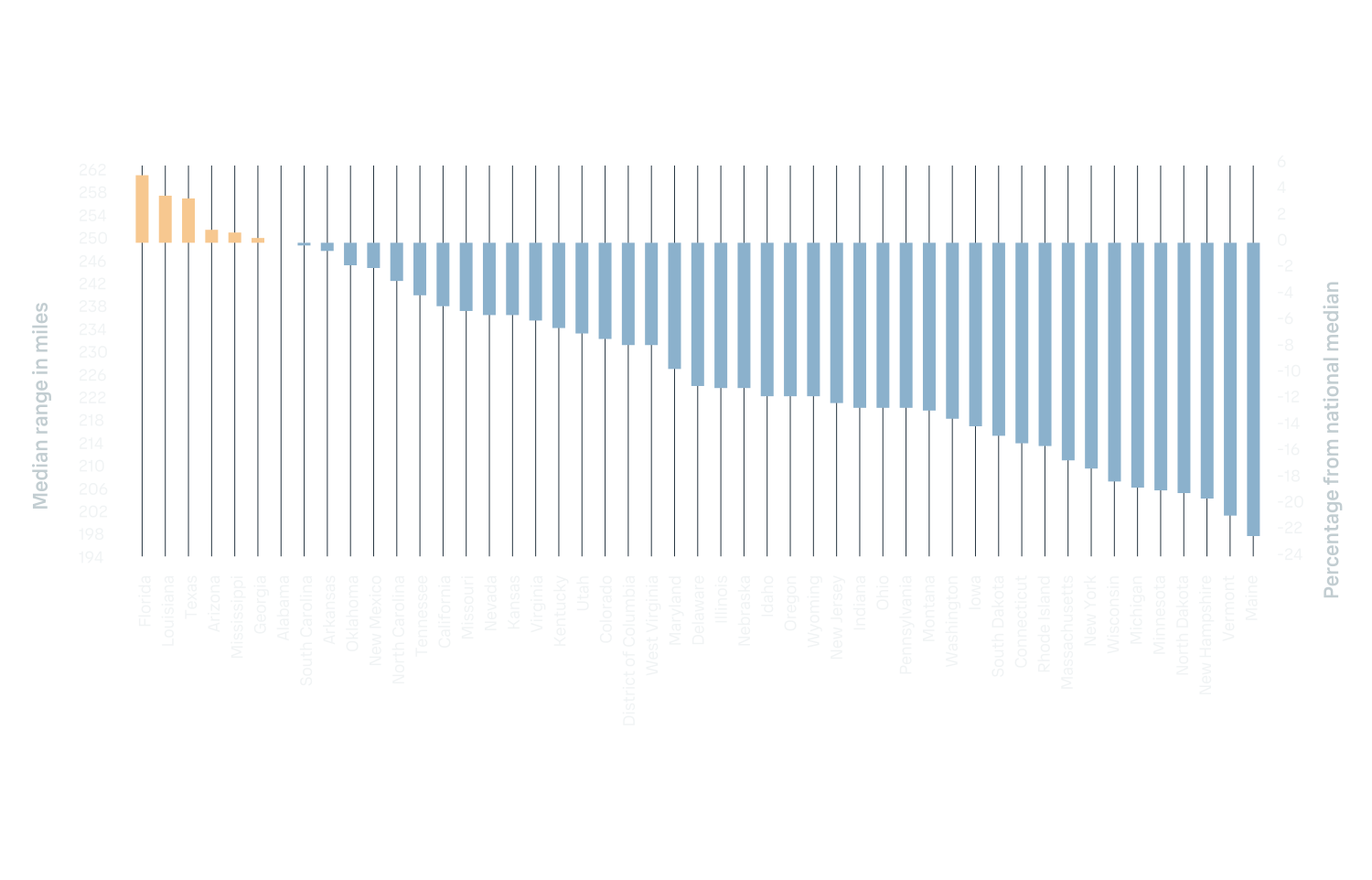
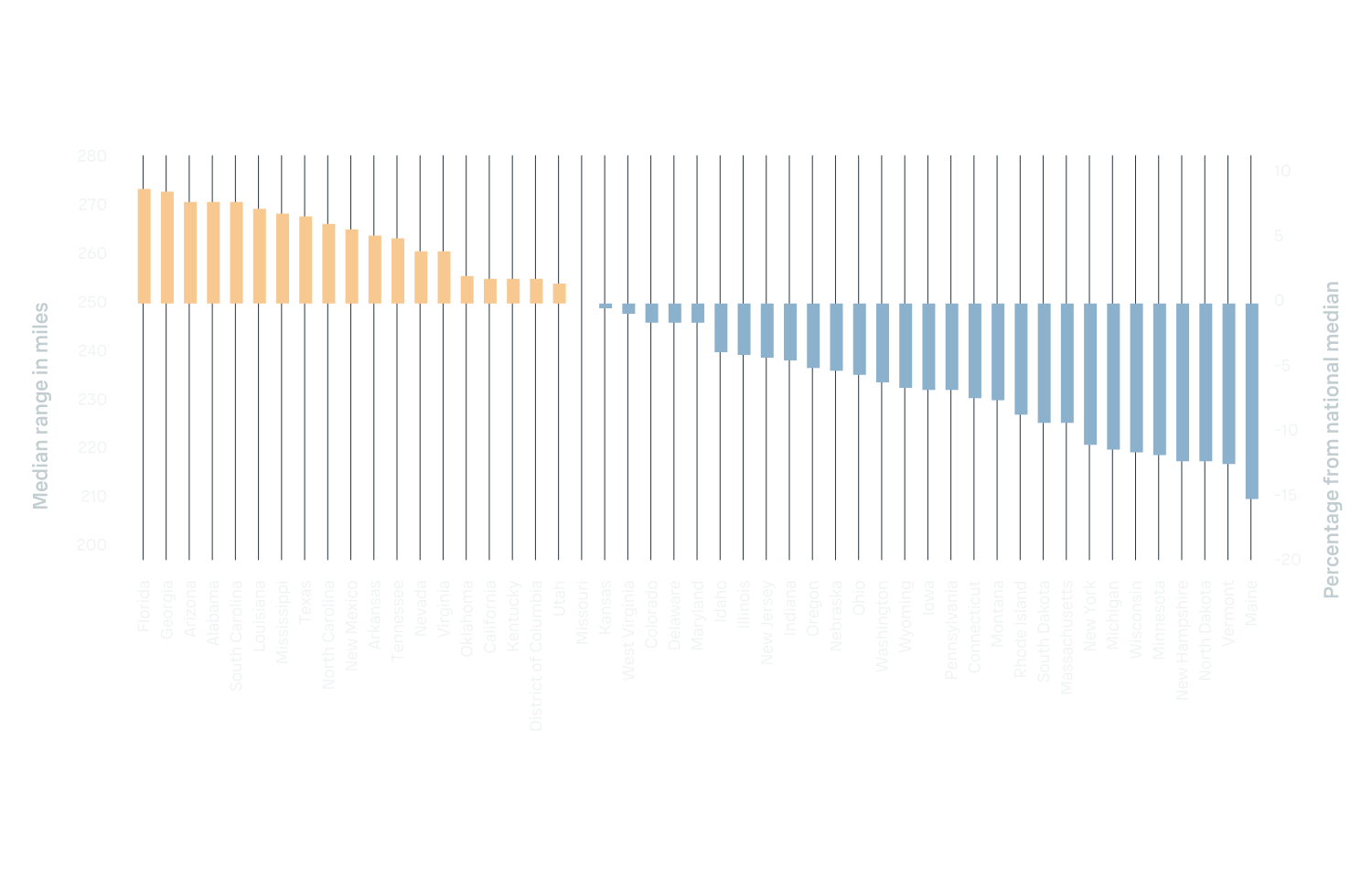
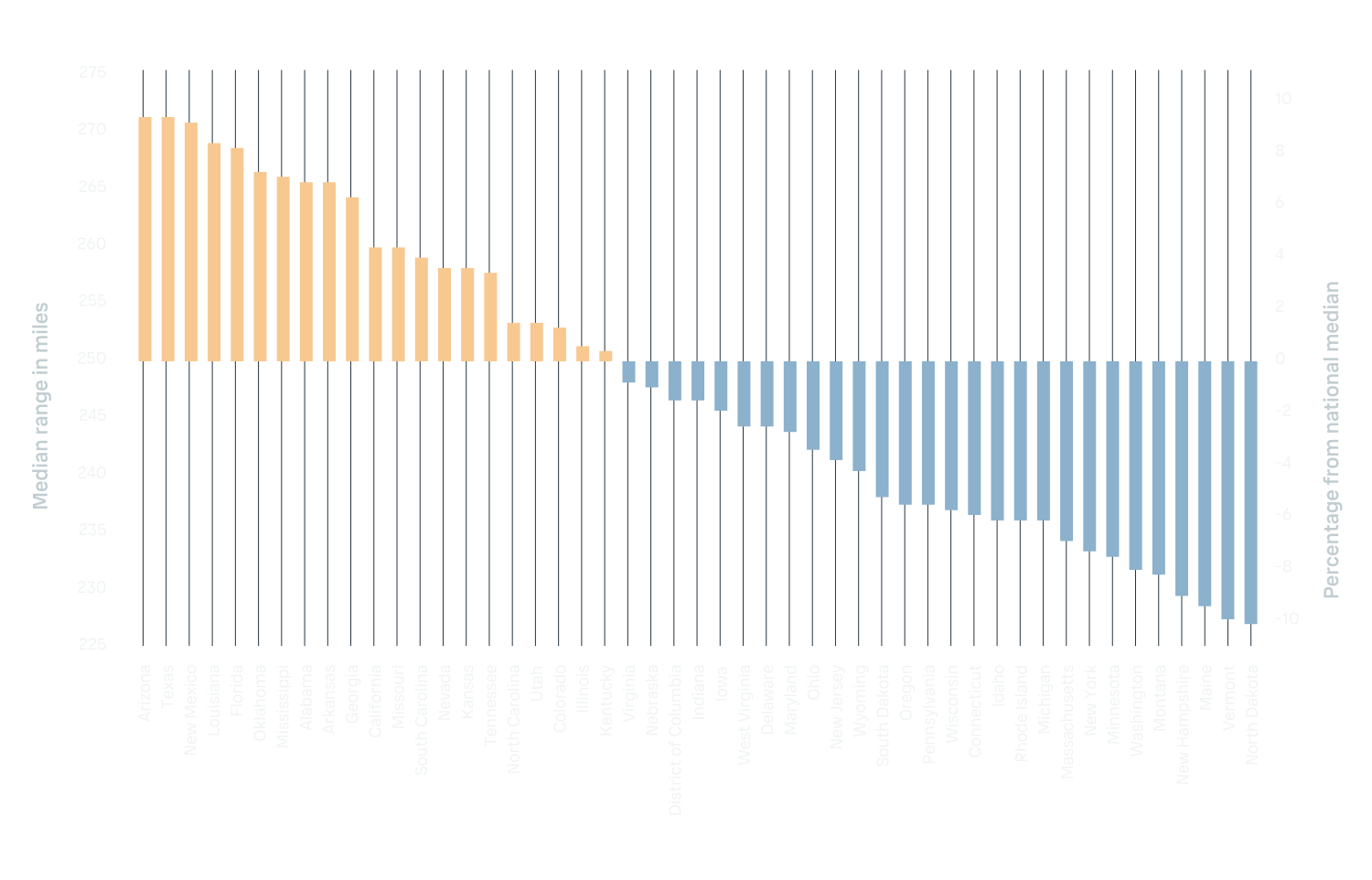
The Sun Belt dominates
In Spring, the highest contribution to energy consumption comes from rolling resistance in most states. Air drag is dominant only in Florida, Texas, and Louisiana. In northern states, cabin heating still increases energy consumption in the spring.
Florida leads, followed by Louisiana, Texas, and Arizona. At the bottom, northern New England states like Maine and Vermont are still shaking off winter. During May, the upcoming summer season starts to affect the rankings.
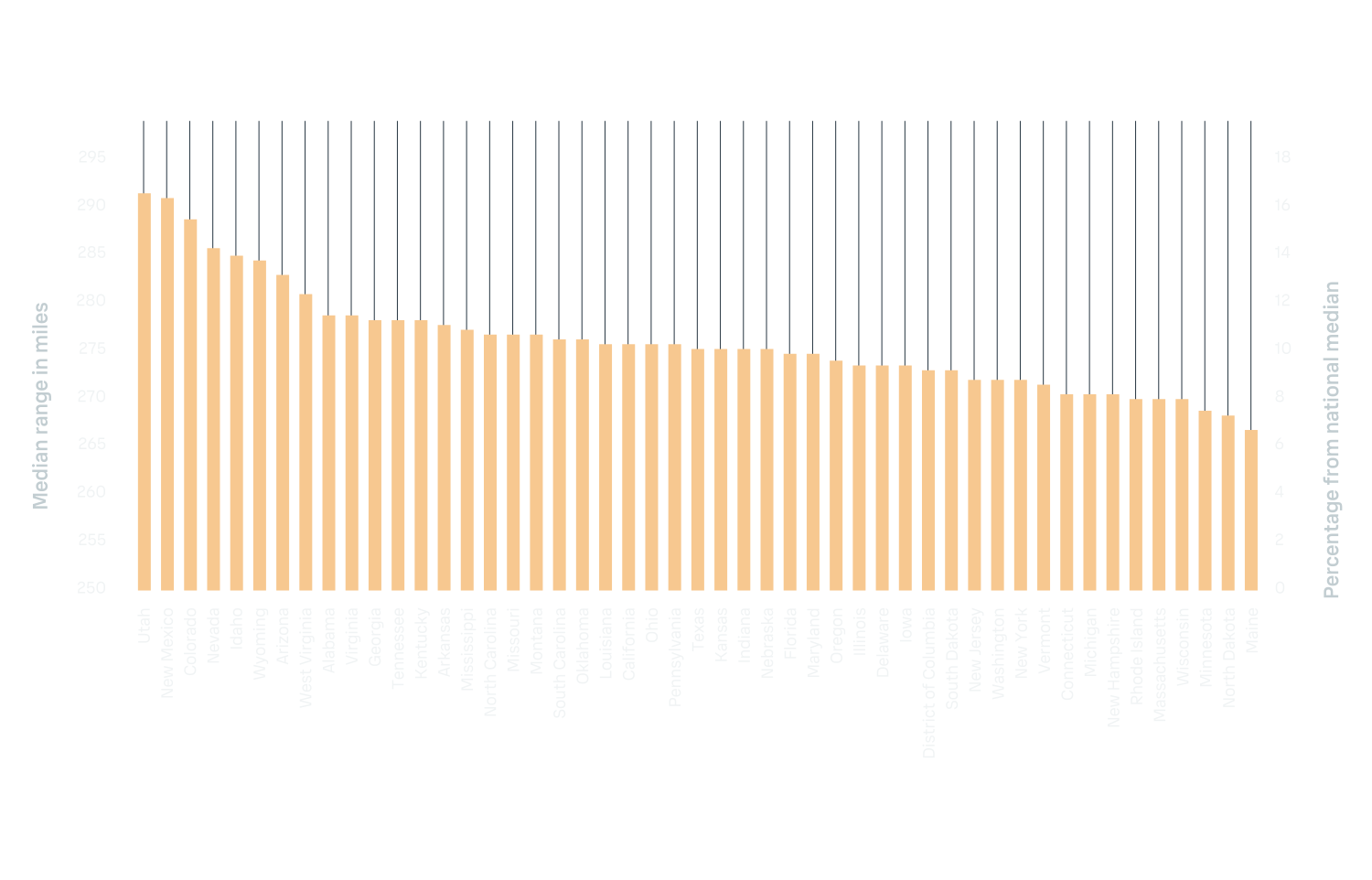
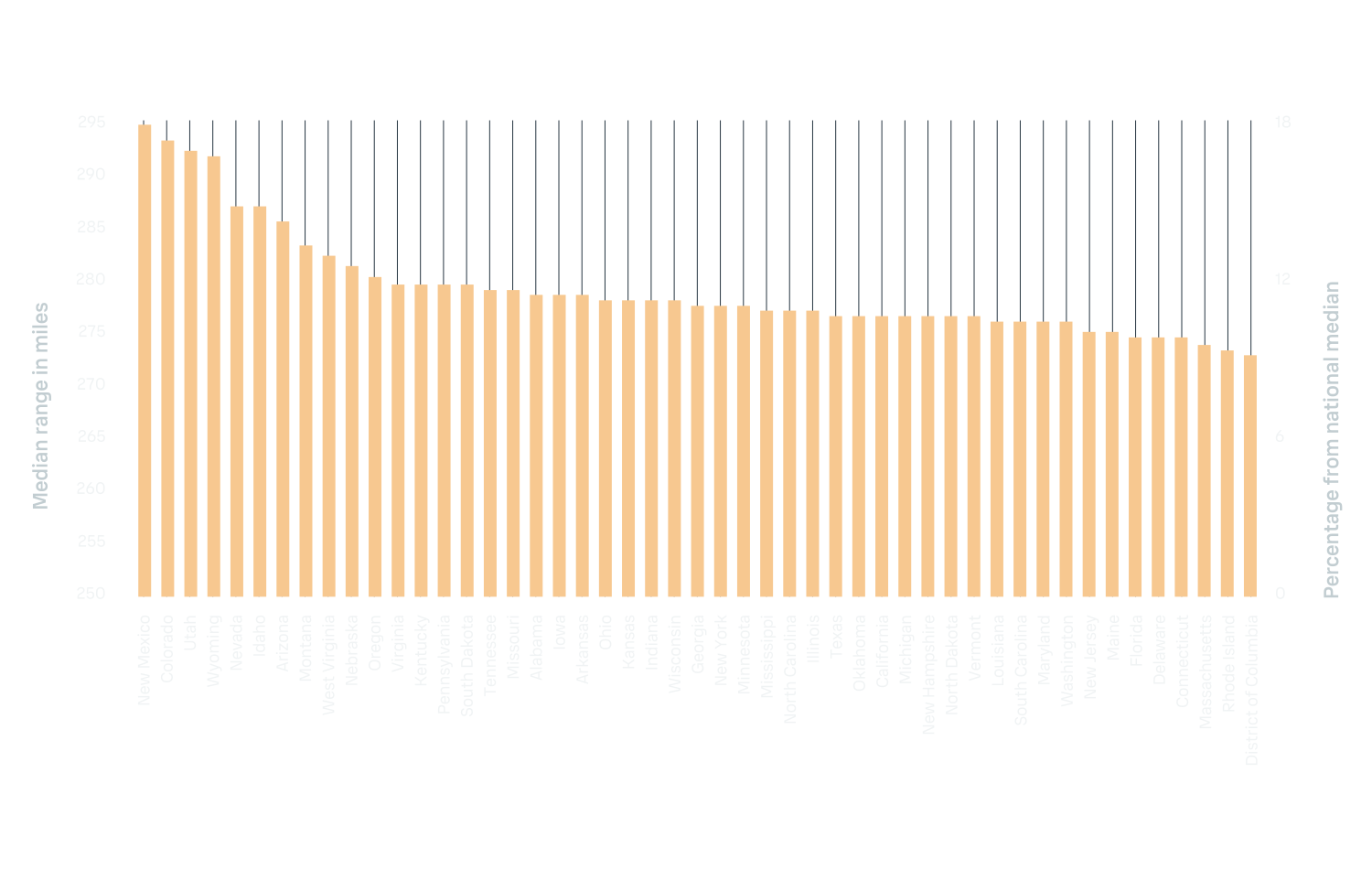
Top spot reshuffle
In summer, the differences in energy consumption between states are small, and air drag has the highest contribution in most of the states.
High-altitude, dry-heat western states take over: New Mexico, Utah, and Colorado surge to the top thanks to moderate temperatures and arid conditions that are ideal for optimal range. Meanwhile, the gap between best and worst narrows, and even the coldest states clear 270 miles.
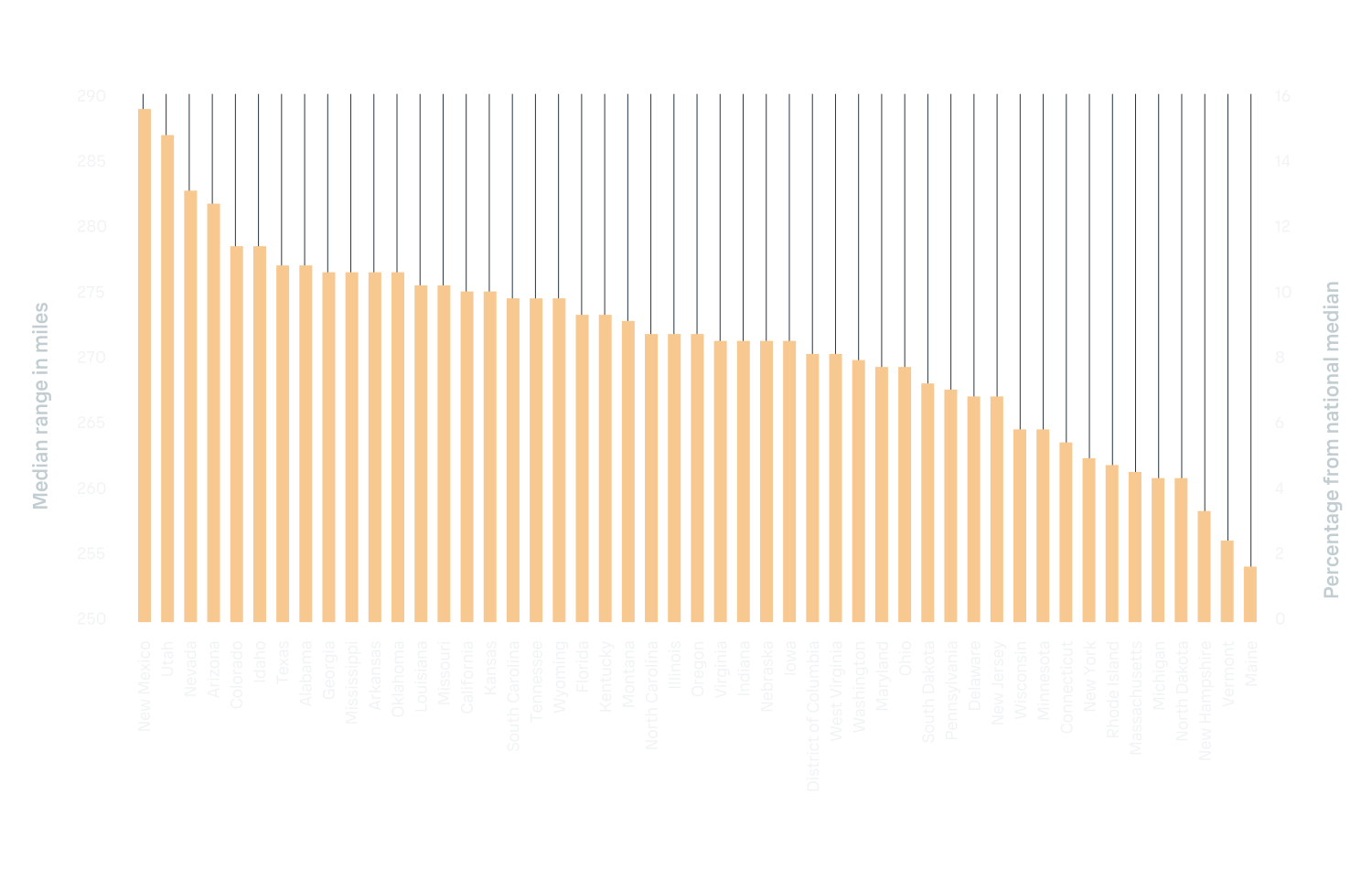
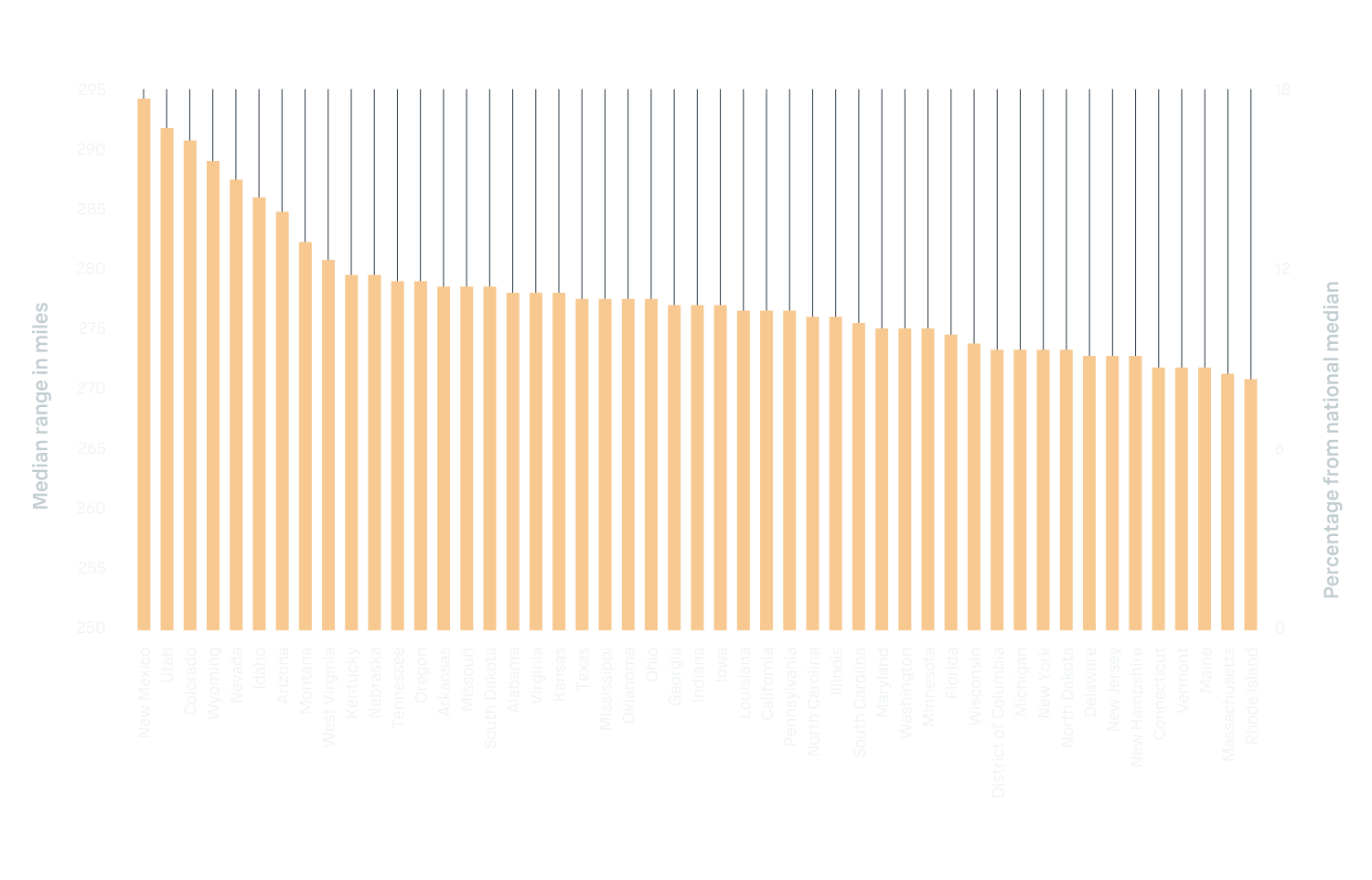
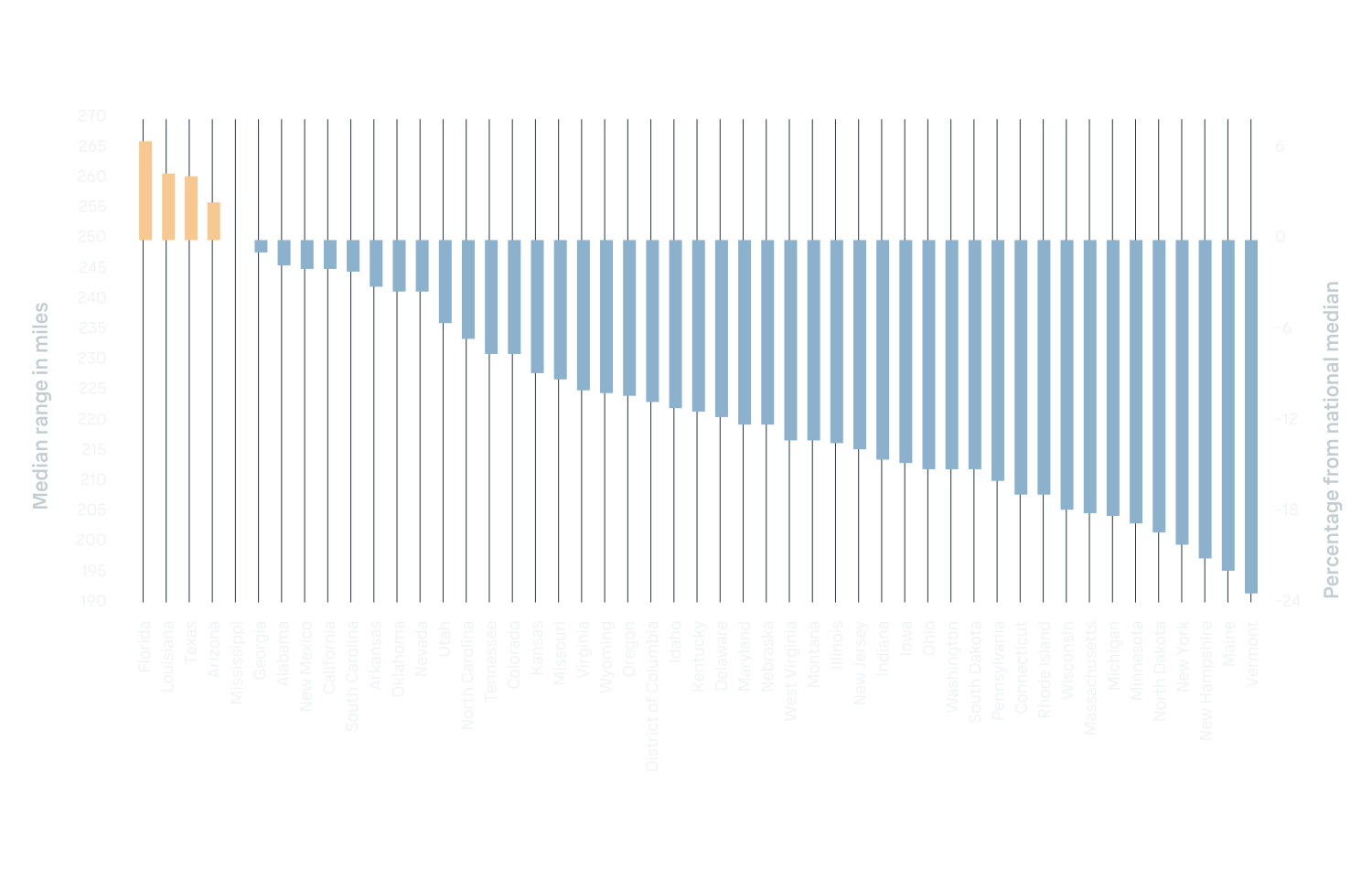
The sunbelt reclaims the top spots
In the fall, rolling resistance starts to dominate as temperatures drop and northern states get their first snow storm/cover
As southern states hold their warmth longer, northern states begin to drop quickly. The national average is close to spring, but the trajectories are heading in opposite directions.
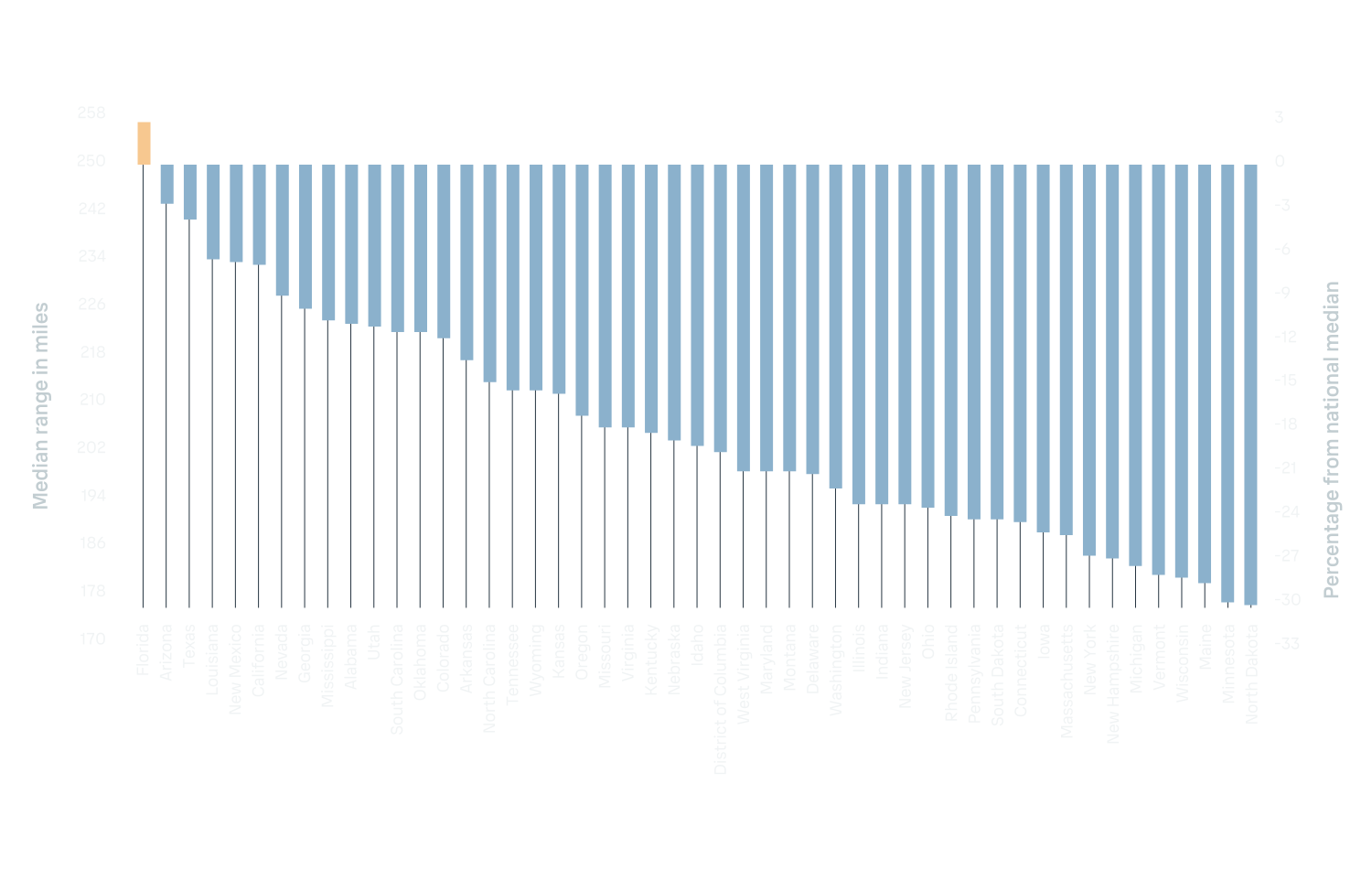
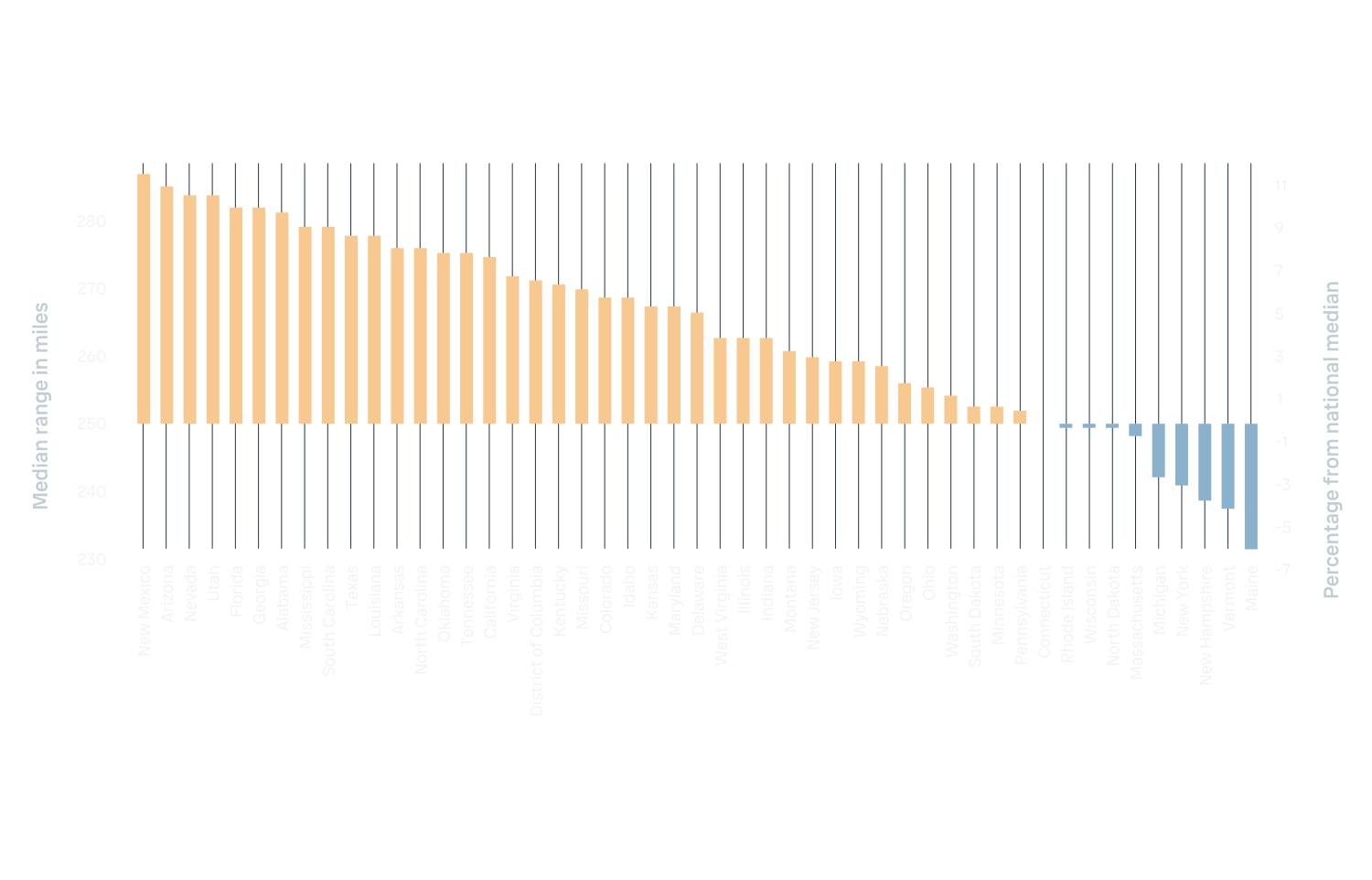
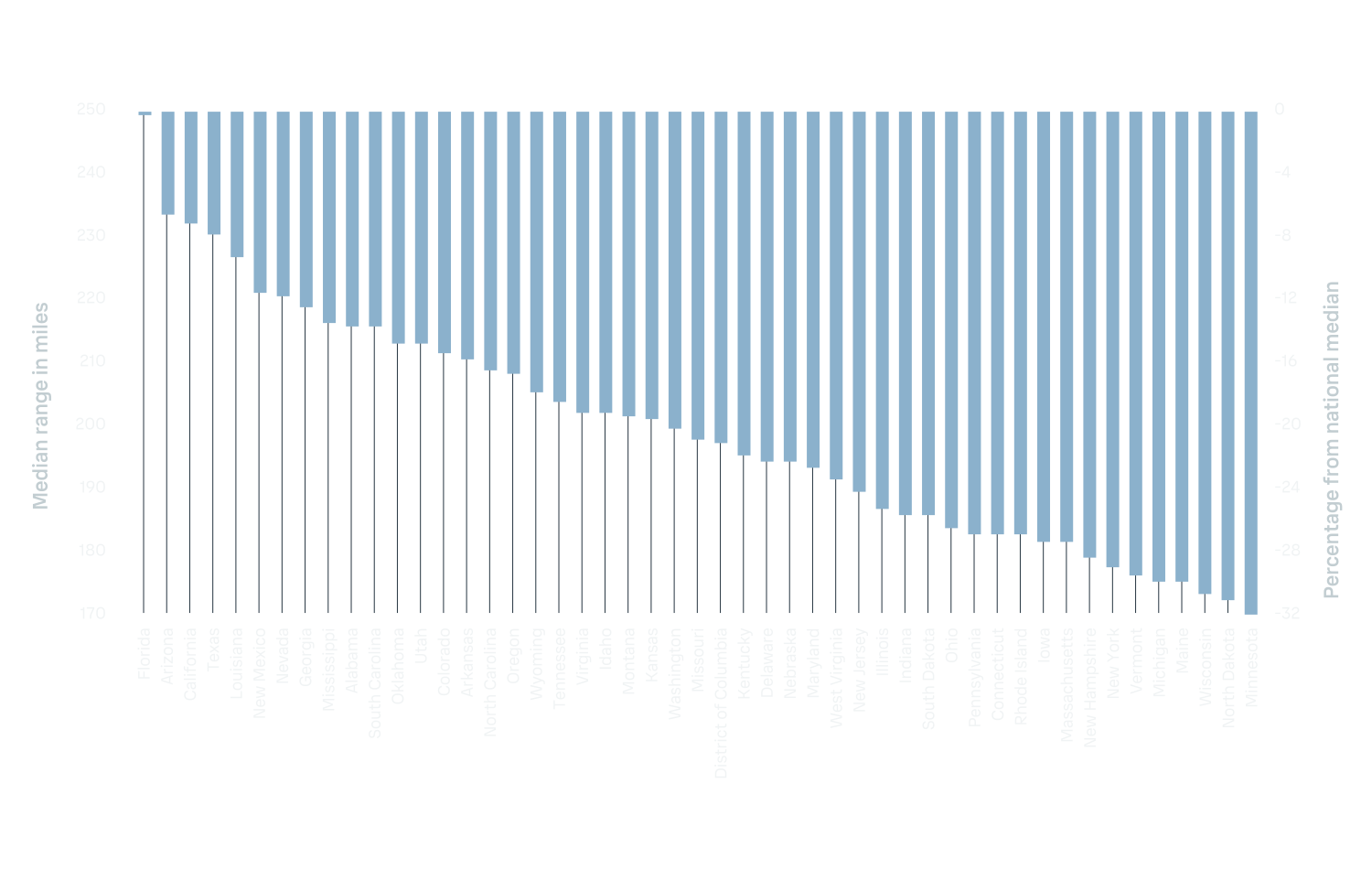
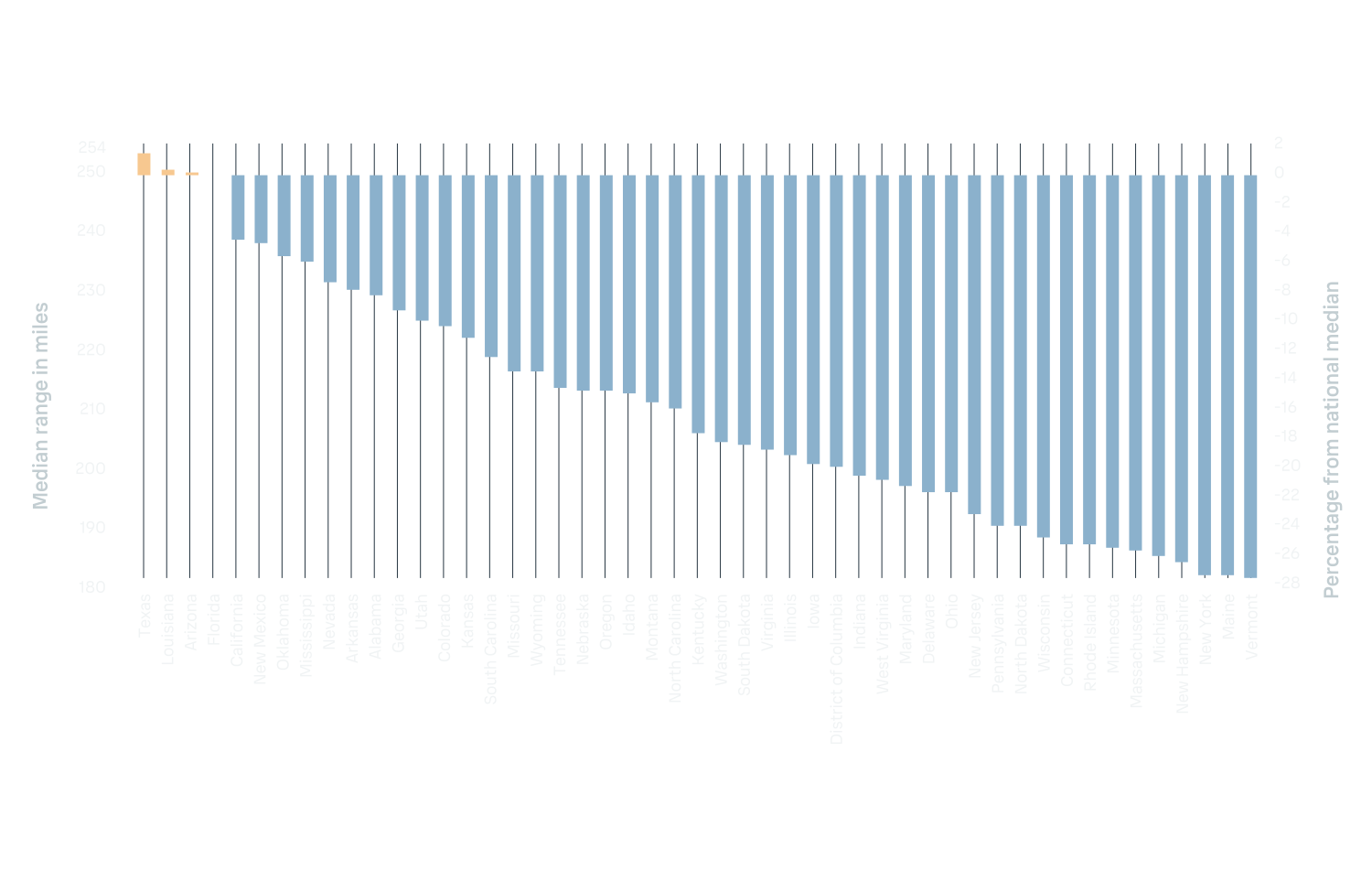
Winter separates the pack
In winter, the highest contribution to energy consumption comes from rolling resistance in all states. Rolling resistance increases as road temperature decreases and when there is snow or water on the road.
Cabin heating also significantly impacts energy consumption, especially in northern states where the January mean temperature is below freezing.
Florida stands alone at the top, ahead of second-place Arizona for most of the winter season. Minnesota falls to the bottom of the pack in January, with a staggering 80-mile range gap from Florida.
- 108 miles
of range lost between July and January in Minnesota.
- ~ 93 %
of summer range retained in Florida during winter.
- 44 mile
drop in range from September to October in Idaho due to colder temperatures and first snow days.
- 52 miles
more in southern states on average than northern states in winter.
A year in motion
Weather and road conditions shape how far an electric vehicle can travel on a single charge, and the effect varies dramatically by season and region. This animation maps estimated EV range across the contiguous United States, day by day, from March 2025 through February 2026.
February 23
See how the Northeast winter blizzard event affected the range from Maryland to Maine.
January 21
See how the extreme cold in January 2026 affected the range across the USA.
July 25
See how severe weather on June 25th, 2025, affected the range in upper Missouri.
Energy consumption
Factors that impact the actual range of EVs
A vehicle's energy consumption depends on the vehicle itself, driving style, route, and weather. The powertrain and aerodynamic efficiency are the main vehicle-related factors, while conscious driving habits can reduce consumption. Routes also vary in energy demand due to elevation, road surfaces, and traffic. Weather impacts can be split into atmospheric conditions (occurring in the air) and road weather conditions (the state of the road surface).
Key atmospheric factors include temperature, solar radiation, wind, air pressure, humidity, and precipitation, with temperature having the greatest powertrain impact. Solar radiation and temperature also affect the cabin, which traps heat like a greenhouse.
Wind significantly influences range through aerodynamic resistance: a 10 m/s headwind can cut highway range by about 19%, while a tailwind may increase it by 6 to 7%. Air density, calculated from temperature, pressure, altitude, and humidity, also plays a role; a drop from +35 °C to −25 °C increases air density by 20%.
On the road, water and snow increase tire rolling resistance, with snow's effect growing linearly with its density.
Energy consumption distribution by state
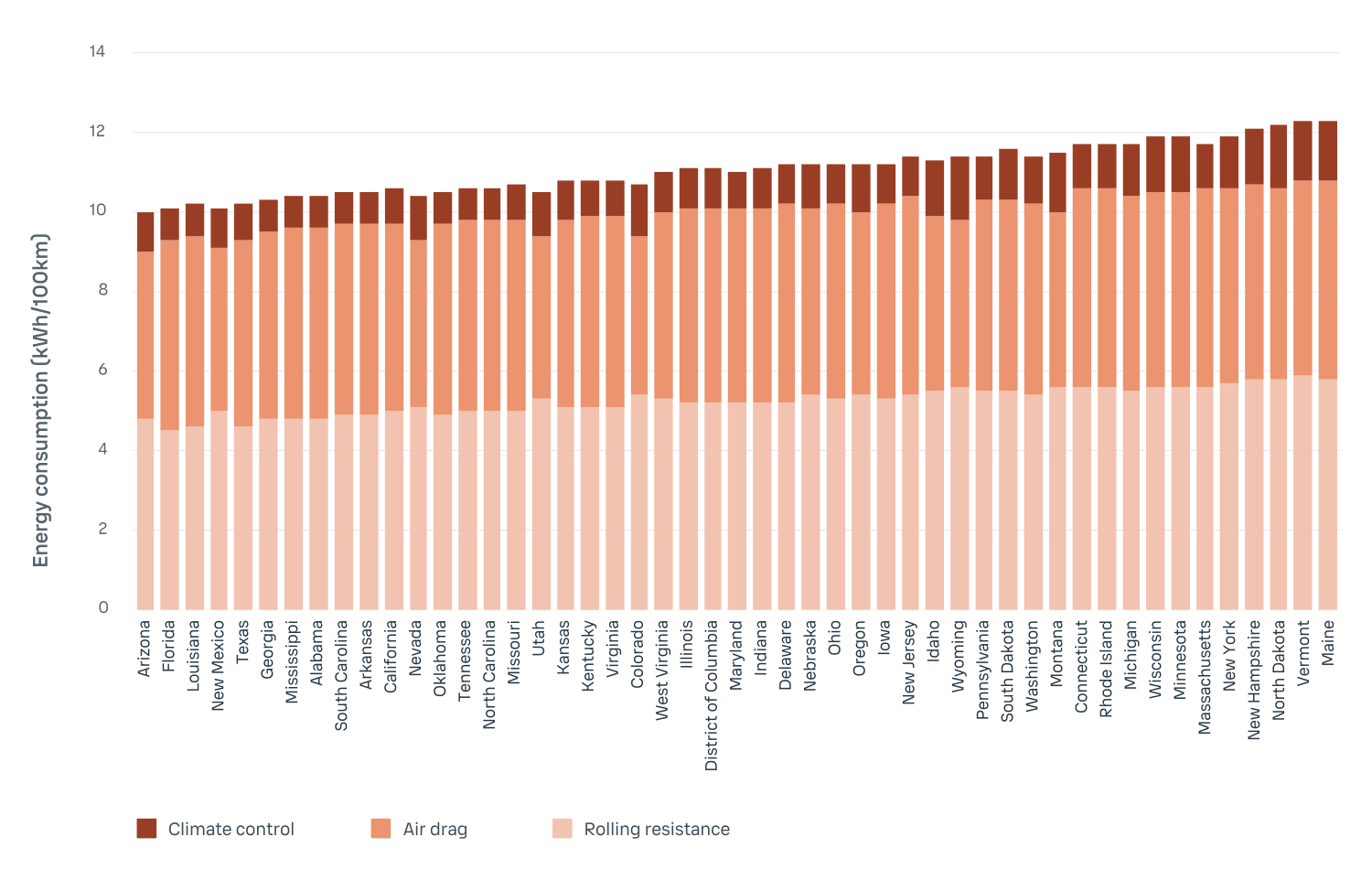
Rolling resistance
Rolling resistance is the dominant energy component in 46 of 49 states on a yearly basis.
Air drag
Air drag was the dominant component in Florida, Louisiana, and Texas.
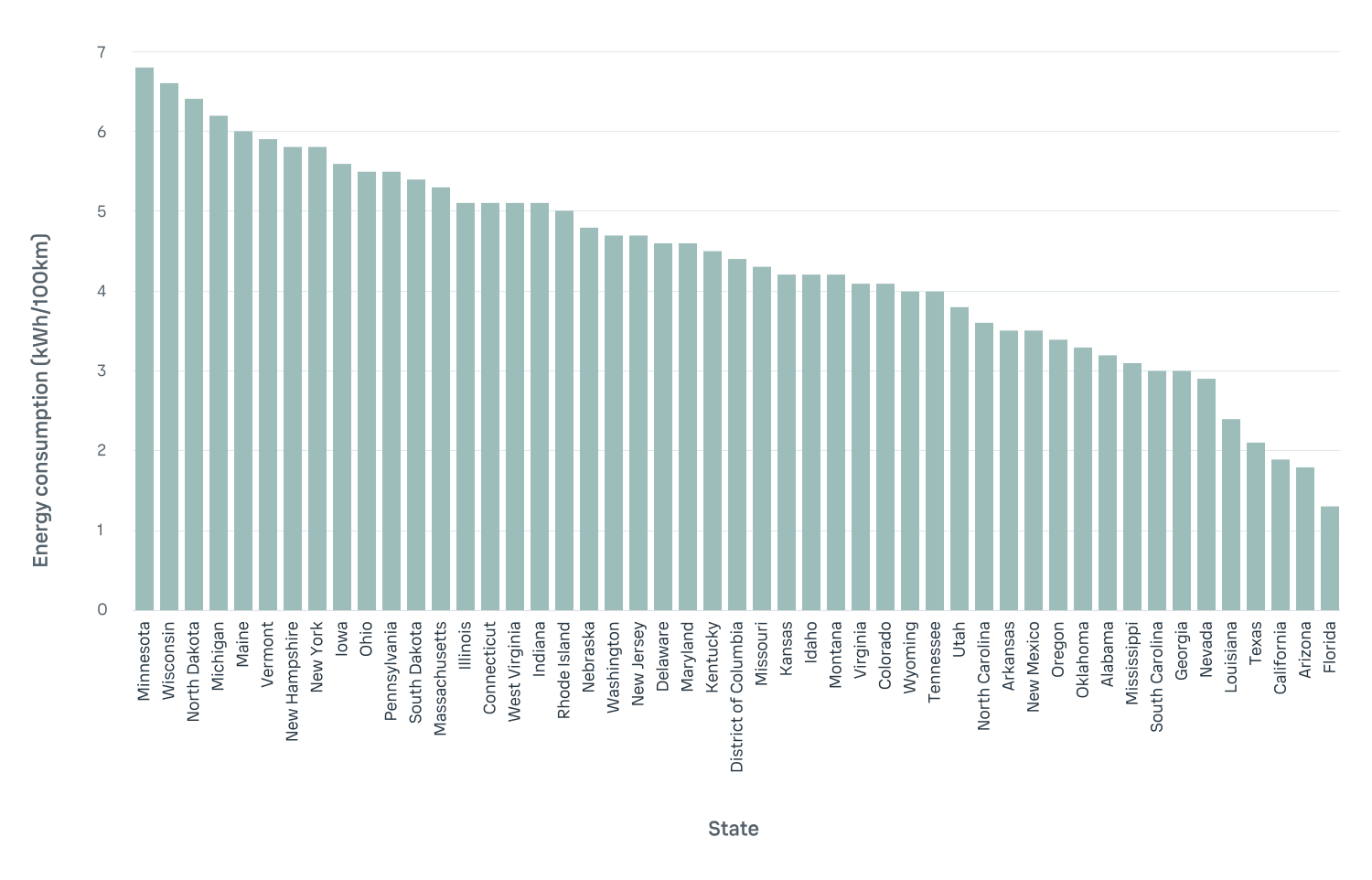
Largest seasonal swing
Minnesota, Wisconsin, and North Dakota faced the biggest winter range penalty.
Most consistent year-round
California, Arizona, and Florida saw minimal seasonal impact on range.
)
Highs and lows
Road segment highlights
Median EV range on the US highways
Zoom in to see the yearly median range across different interstates and primary roads.
Map visual created using MapsGL
Montana Avenue
in Cielo Vista, El Paso, Texas, had the highest yearly median range with 284 miles due to more optimal conditions with higher mean temperatures and having fewer wet days.
Interstate 95
in Dyer Brook, Aroostook County, Maine, had the lowest yearly median range with 207 miles due to lower mean temperatures and having more snow and wet days.
)
New this year: EV weather in Europe
Europe range highlights
EV range weather across Europe
- ~ 15 billion
range estimates for the Europe analysis
- 400 km
baseline range for Europe
- 80 km/h
speed limit roads only
European countries ranked by EV weather
EV range parameters
Xweather EV range parameters
EV range parameters provide detailed weather and road condition data for EV manufacturers to optimize vehicle systems, improve efficiency, and predict range more accurately. These parameters are available through the Weather API.
Relevant parameters
Xweather delivers precise road and atmospheric weather parameters that affect range prediction and thermal management. Wind speed is calculated at 2 m height, not the 10 m weather industry standard.
Global coverage
Global coverage for atmospheric weather conditions is complemented by complete spatial and temporal coverage of public paved roads in North America, Europe, Japan, South Korea, Australia, and New Zealand.
Flexible delivery
Point-based, route query, or batch delivery with real-time data updated every 15 minutes, a 24-hour road condition forecast, and a 14-day atmospheric weather forecast.
How to access Xweather EV range parameters
01Sign up
Create an account and start a free 30-day API trial. Full access to all Weather API endpoints from day one.
02Get key
Access your client ID and client secret from the dashboard. Use our documentation to authenticate requests in your preferred language.
03Query EV range parameters
Use the roadweather/analytics endpoint and add a parameter: &filter=evrange to return EV range parameters.
04Deploy and scale
Get continuous support from early validation to performance testing and on to production.
For media
Want to understand the report and road weather in more detail or arrange an interview with one of our experts?
Media contact:
Megan Schaefer
Media & Public Relations Manager, Vaisala Xweather
media@xweather.com
To share key insights from our EV range report, access the media kit below.

Previous reports
Footnotes
(1) Air drag increases as the square of velocity, meaning a headwind increases aerodynamic drag disproportionately compared to a tailwind of the same speed. For example, if a vehicle traveling at 55 mph encounters a 10 mph headwind, the effective speed for drag calculations becomes 65 mph. The drag force is proportional to the square of the effective wind speed, so the drag at 65 mph is significantly higher than at 55 mph. Conversely, with a 10 mph tailwind, the effective speed is 45 mph, and the decrease in drag is less pronounced due to the same square relationship. This explains why headwinds have a greater negative impact on energy consumption than tailwinds provide as a benefit.
(2) Vehicle aerodynamic design typically minimizes air drag from the front. As a result, sidewinds create additional turbulence, increasing total aerodynamic drag beyond what the headwind component alone might suggest. Regardless of vehicle shape, since drag force increases with the square of wind speed, any sidewind component adds to drag if the vehicle moves faster than the tailwind. These effects raise energy consumption, even when the wind is from the side or slightly behind.
(3) The impact of water film thickness and snow depth on EV energy consumption is capped, as thicker layers are assumed to slow driving speeds, offsetting increased rolling resistance with reduced air drag. Additionally, it is assumed that during heavy snow events, most people avoid driving until roads are plowed.