
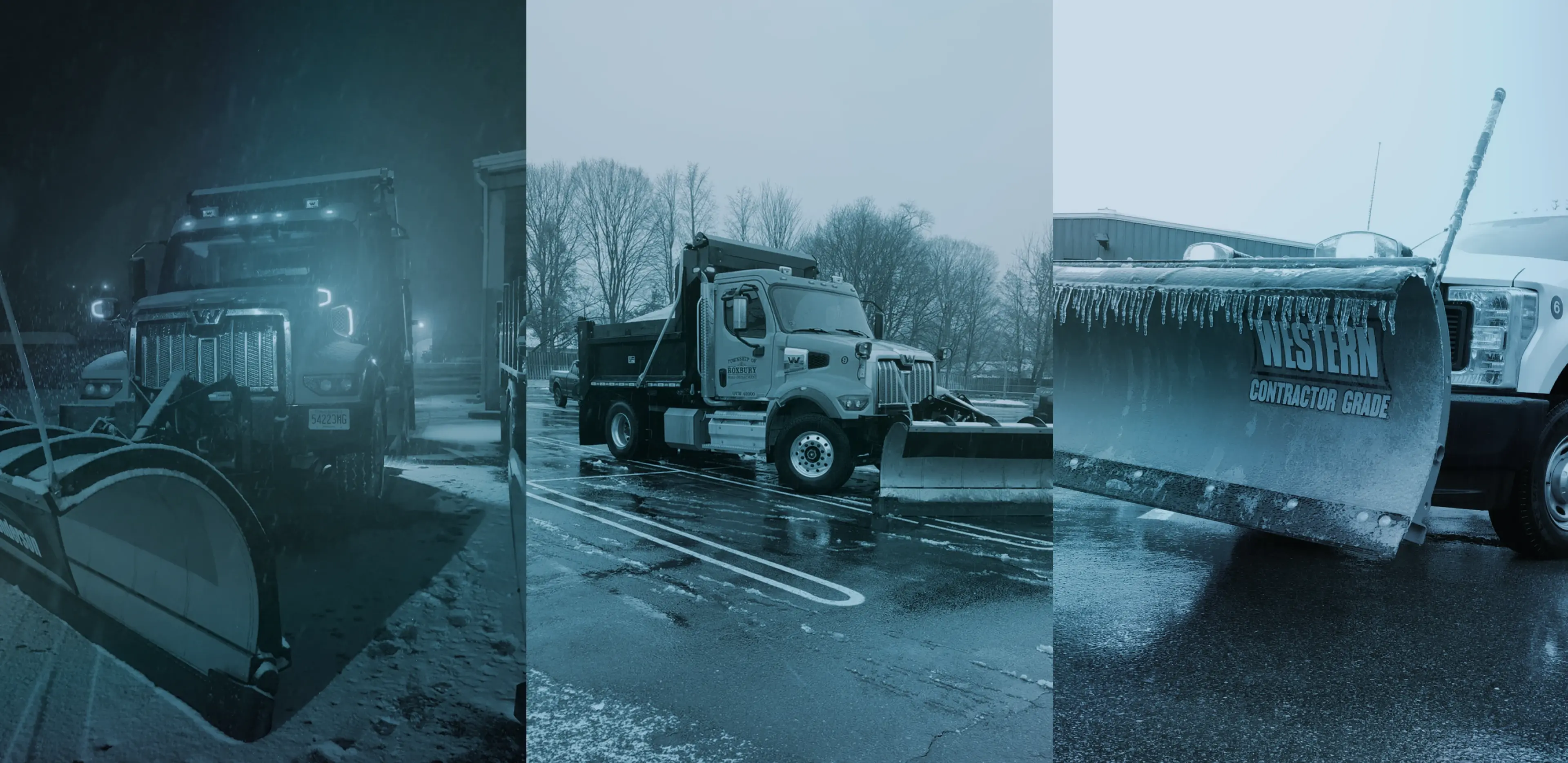
The Township of Roxbury, New Jersey, used 30% less road salt in the 2025–26 winter than in the winter before, and spent $90,000 less doing it. So, what changed and how did they do it? Let’s take a look.
Roxbury's challenging road network
Roxbury maintains just over 100 miles of road spanning 26 square miles. The township includes several areas with sharp changes in elevation from 600 feet at the low point to 1,200 feet at the high point. Lake Hopatcong, New Jersey’s largest freshwater lake, borders the township to the north. The lake has its own microclimate around the shoreline with fog, freezing fog, and refreeze events that don’t necessarily match conditions on the rest of the network.
Limiting salt use near the lake has been a long-standing practice for Roxbury’s public works department. Elsewhere on its network, differences in elevation and exposure made treatment decisions challenging. Conditions could vary considerably from one area to another, and the weather forecast did not always reflect conditions in certain sections of town. The local forecast could call for conditions to improve across the township while the shoreline was still icing over, or the other way around.
The public works team relied heavily on visual inspections and observations from employees to determine when roads needed to be treated or re-treated. This meant knowing about a problem on one part of the network often depended on someone being there to see it.
Ending the reliance on visual inspections
In October 2025, Roxbury adopted Xweather Horizon, a winter maintenance platform that forecasts road weather conditions by route instead of relying on a general atmospheric weather forecast for the whole township. Xweather Horizon pulls in data from weather stations, connected vehicles, and in-ground sensors, and turns it into a forecast of road surface temperature, grip, precipitation type, and expected accumulation for each stretch of road. Rather than waiting for someone to see the conditions firsthand, the Roxbury public works department could check and monitor the state of the whole network from one dashboard.
To put ground-truth data behind its forecast, Roxbury installed five Vaisala GroundCast sensors across its network. Each wireless sensor measures road surface temperature, subsurface temperature at two depths, residual salt concentration on the pavement, and whether the surface is dry or not, all without external power or infrastructure work to install.
The township placed its sensors in locations where, historically, conditions were known to decline before the surrounding areas. Readings from these locations indicated when treatment was necessary before conditions worsened on the rest of the route. The supervisor on duty was able to make salt application decisions based on whether the real-time road surface temperatures were rising or falling in each part of the town. Residual salt readings let crews judge whether a route needed another pass, instead of waiting for a firsthand observation or re-treating on a fixed schedule.
Xweather Horizon gave Roxbury visibility into current and future road weather conditions across its network with a dashboard that showed the real-time conditions from the sensors and a 72-hour road weather forecast. This data gave supervisors the confidence to decide when and where to treat each route.
Roxbury used 30% less salt and saved $90,000
Comparing the 2025–26 season to the previous winter, for the same number of events, Roxbury’s public works department recorded:
Salt usage down 30%, saving $90,000
Overall labor hours were down
Reduced call-outs due to better visibility of network conditions
Lower salinity readings in the lake due to reduced salting in the area
Improved call-in timing for each storm
Each one of these results points back to the same change: crews could finally see what was happening on the road, rather than working from a single forecast for the whole township.
What’s more, the salt savings in the first season alone more than covered the cost of the Xweather Horizon service and GroundCast sensors.
Roxbury's advice for other communities
Understand what’s happening on your roads. Air temperature and pavement temperature can be very different, especially during borderline storms. Real-time road condition information is often the deciding factor in whether to treat, re-treat, or hold off.
Place sensors where conditions change first. Readings from those locations can signal when treatment is needed before conditions worsen elsewhere.
Separate elevated and water-adjacent routes explicitly. There are times when only the higher elevations of a network need treatment, while the rest needs none at all.
Roxbury's public works department answers for more than winter roads. Lake Hopatcong is where residents fish, boat, and swim during the rest of the year, and keeping it in good shape is as much a part of the job as keeping the roads clear each winter. In its first winter with Xweather Horizon, the department used 30% less salt across its entire network and kept the roads safe. Next season is a chance to do it again.