




)
)
)
)
)
)
)
)
)
)
)
Xweather First
Charleston, SC - November 4-5, 2026
Keynotes from NVIDIA, AWS, and Vaisala Xweather. Sessions with Waymo, FEMA, and leaders across energy trading, finance, and severe weather risk management.
Meet the peers already using AI to turn weather into an upside — and learn exactly how they're doing it.
)
Who's the event for?

Traders & insurers
Deep dive into weather-based financial systems, weather risk management, trading, and parametric insurance.

Energy operators & developers
Latest operational use cases of intelligent weather systems for energy infrastructure, energy optimization, and forecasting.

Severe weather science & technology
Learn how science turns into weather-aware systems. The new frontier of lightning safety, automotive use cases, and road maintenance.
Industry-leading speakers
)
Keynote speakers
)
What's next for Nvidia, weather tech, and beyond
)
Economic and environmental AI: Making climate data investable, turning weather intelligence into ROI
)
Xweather opening keynote
)
Meteorology transformed by AI
Agenda
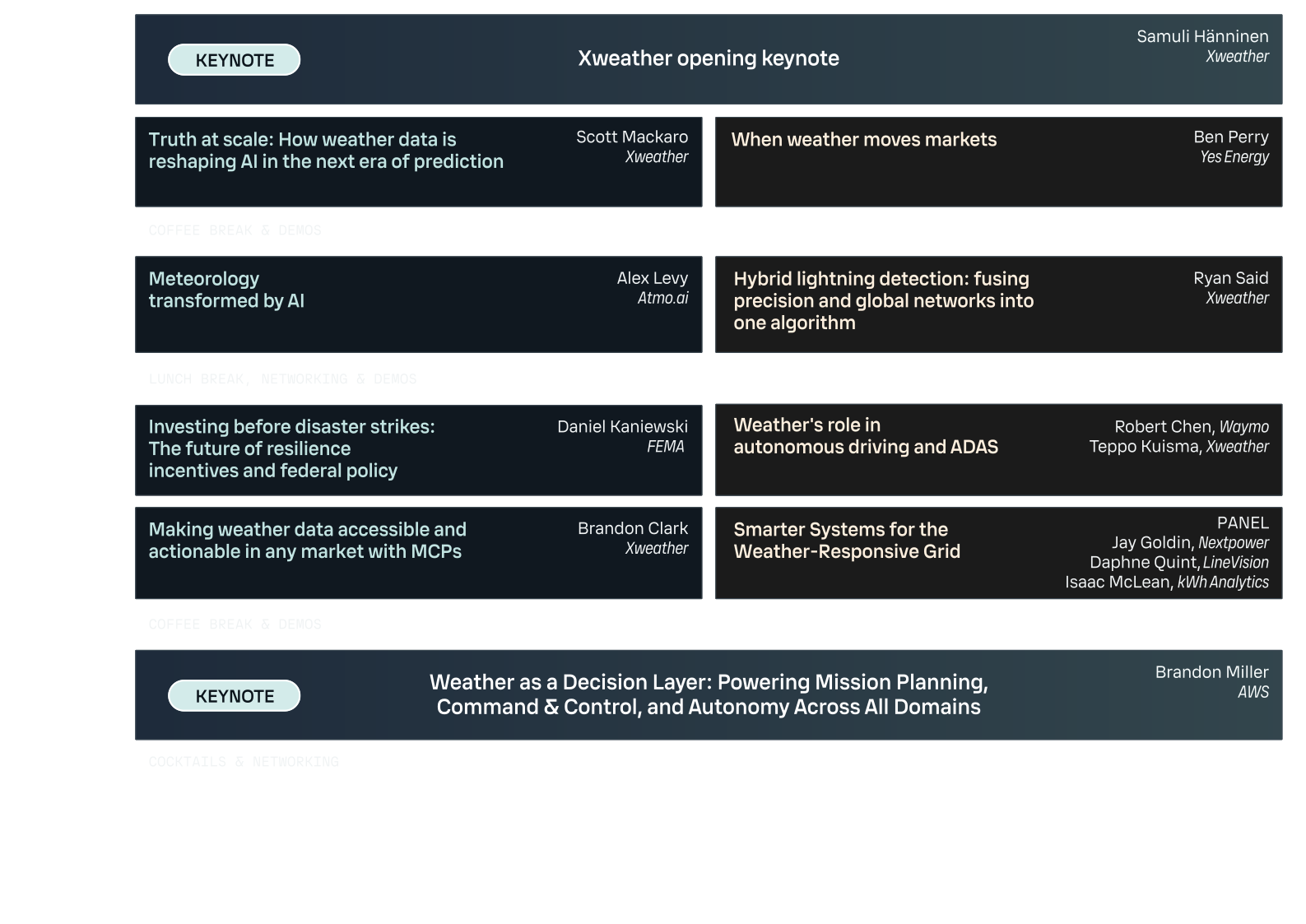
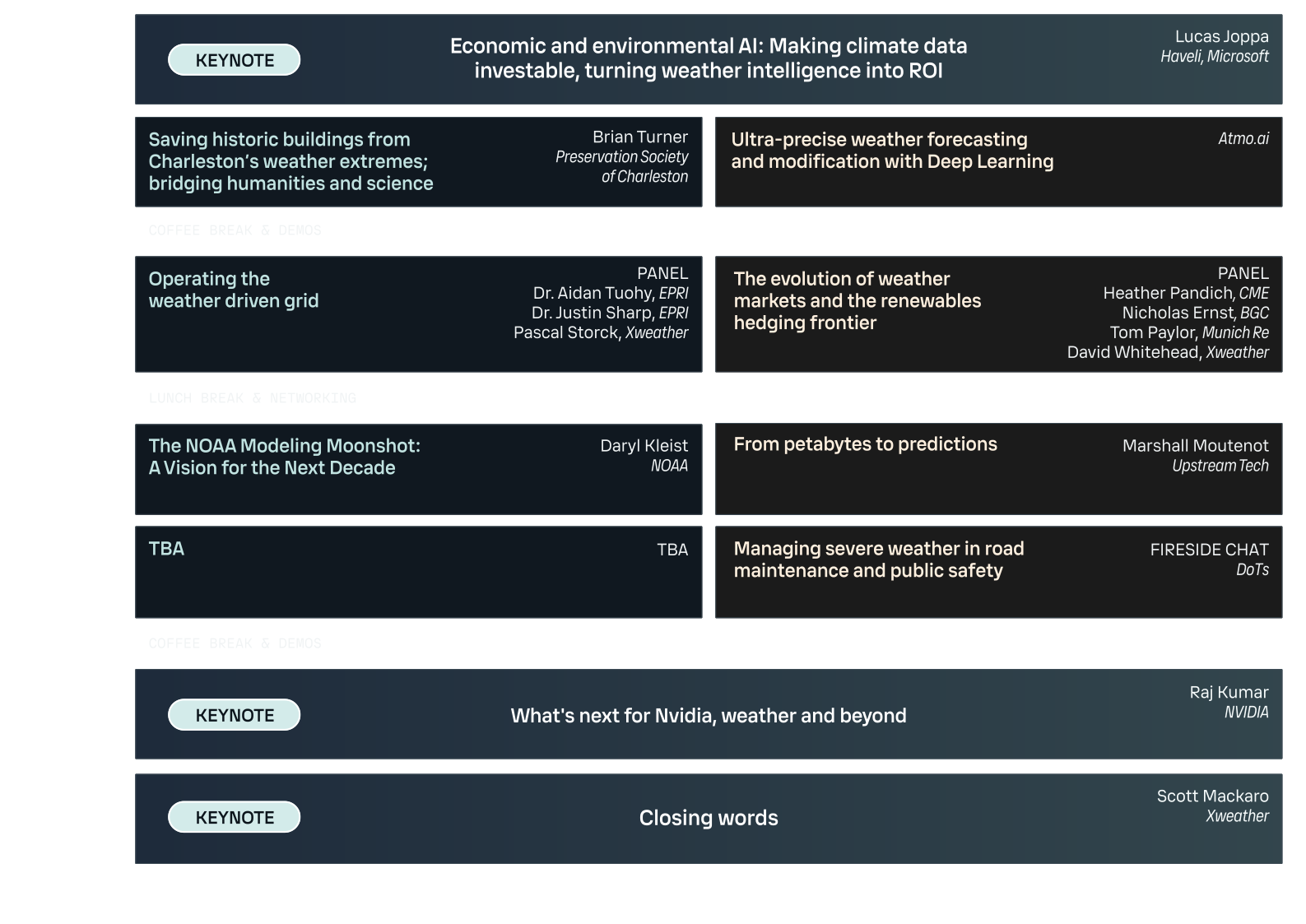
Two days of industry insights
Gain expert perspectives across finance and insurance, energy, and severe weather science and technology, with sessions focused on practical challenges and emerging approaches.
Networking
Meet your peers, share learnings, and swap ideas within and across your industry. Sign up for small-group networking events along the official program.
Industry-leading keynotes
Hear directly from NVIDIA, AWS, and Xweather on where AI-driven weather intelligence is headed — plus Haveli on turning climate data into investable returns.
Industry tracks
Finance and insurance
Talks with FEMA, CME, BGC, Munich Re, Xweather and Preservation Society of Charleston
Live demos
On-site weather monitoring as the new frontier for parametric insurance

Energy
Talks with ESIG, EPRI, Xweather, Yes Energy, Upstream Tech, Nextpower, Linevision and kWh Analytics
Live demos
Managing weather impacts of renewable energy from the project to market scale
Early-run model data for every ECMWF and GFS cycle
Severe weather science and technology
Talks with NOAA, Waymo, Xweather, Atmo.ai and DoTs
Live demos
Natural language AI forecasts and operational guidance
:focal(1238x630:1239x631))
Get 20% off
Save 20% when you register today using code xwefirst20.
Unique networking experiences
Meet your peers, share learnings, and swap ideas within and across your industry. Sign up for small-group networking events along the official program.
Ticket includes one experience.
- Golfing
Enjoy the beautiful South Carolina golf courses in industry insider and cross-industry foursomes.
- Sailing
See Charleston from a different viewpoint while exchanging ideas in small group roundtables and social dining and drinks.
- Dining
Get to know Charleston's vibrant foodie scene and keep the conversation flowing in intimate and private networking for 2-8 and casual socializing, loosely facilitated.
)
Industry learnings & career development
Purpose-built formats that turn conversations into actionable outcomes and direct access to decision-makers, partners, and Xweather leadership.
Build high-value connections
Direct access to decision-makers, partners, and Xweather leadership
Curated industry roundtables that connect you with peers facing the same commercial and operational challenges
Cross-industry exchange to surface transferable strategies and edge cases
Hit professional development goals
Documentation for professional development approval (certificate and agenda)
Clear alignment to internal development goals and budget justification
Join a conversation with members of the Science Advisory Board that provides recommendations to national weather services and policy-makers
Venue & discounted accommodation
Venue
Twenty-One Magazine, or Old Charleston Jail, was built in 1802 and is one of the city’s most historically significant buildings.
21 Magazine Street
Charleston, South Carolina, USA
Accomodation
We have secured discounted pricing at Marriott's Moxy Charleston Downtown. When you sign up, you'll receive a unique booking code to book a room.
Prices start at $235 per night.
)
Charleston guide
Want to enjoy Charleston over the weekend? See our curated guide!
Charleston doesn't need much introduction, but it does reward those who go beyond the obvious. This guide is the Xweather team's edit of the city: the places we actually go, the drives we actually take, and the things we wish someone had told us the first time.
Get your ticket
General admission: 499.00 USD
Science and academia: 49.90 USD
Register now and save 20% with code xwefirst20.